
An MLS look up is one of the most useful ways to understand a property, but it is easy to skim past the details that actually affect value, timing, and negotiation strategy. Price and photos matter, but the real story is often in the status, remarks, property facts, tax history, HOA notes, disclosures, and recent listing activity.
Whether you are a buyer comparing homes or a seller checking how your listing appears online, the goal is not simply to find a property. The goal is to verify what the listing says, notice what it does not say, and know which details require follow-up before you make a decision.
What an MLS Look Up Can and Cannot Tell You
MLS stands for multiple listing service. In the United States, there is no single national MLS that contains every home in one place. MLS systems are typically regional databases used by licensed real estate professionals to share property information, cooperate with other brokers, and syndicate listings to brokerage websites and major real estate portals.
A good MLS look up can help you review the core facts of a property, including price, status, bedrooms, bathrooms, square footage, lot size, days on market, photos, remarks, showing instructions, and sometimes disclosures or attached documents. Many MLSs also follow data standards influenced by organizations such as the Real Estate Standards Organization, which helps make property data more consistent across platforms.
Still, MLS data is not a substitute for due diligence. Square footage can be sourced from tax records, seller statements, appraisals, or builder plans. School boundaries can change. HOA rules may not be fully summarized. A listing may also contain agent-only remarks that are not visible on public websites. Treat the MLS as your starting point, then verify important details through the right source.
Start With the Right Version of the Listing
The first step is knowing where your MLS data is coming from. A listing on a national portal may look similar to a listing from an agent portal, but the fields, refresh speed, and visibility of certain details can differ.
| Source | Best use | What to watch for |
|---|---|---|
| Direct MLS or agent portal | Most complete listing review when available | Access is usually limited to licensed agents or invited clients |
| Brokerage website | Searchable listings with frequent MLS syndication | Some fields may be simplified for public viewing |
| Major real estate portal | Broad consumer search and map browsing | Updates may lag, and not every MLS field is displayed |
| County or municipal records | Ownership, parcel, tax, and permit checks | Records may not reflect recent renovations or pending sales |
If you are a buyer, ask your agent to share the full MLS detail sheet when you are seriously evaluating a property. If you are searching on your own first, learn how to build better filters and alerts so you are not overwhelmed by irrelevant results. NetRealtyNow has a useful guide on how to search MLS listings more effectively when you want a stronger search process before touring homes.
If you are a seller, look up your own listing from multiple public sources after it goes live. Your listing should display correctly across the MLS feed and downstream portals, especially the price, photos, property type, bedrooms, bathrooms, and remarks.
Verify the Property Identity Before Anything Else
Before comparing price or falling in love with photos, confirm that you are looking at the exact property you think you are. This sounds obvious, but mistakes happen most often with condos, townhomes, multi-unit properties, new construction, and homes with similar street names.
Check the full address, unit number, parcel number if available, municipality, property type, and tax map details. For condos and co-ops, confirm whether the listing refers to the specific unit, a parking space, a storage unit, or any limited common elements. For rural properties, acreage and boundaries should be verified with a survey or county records instead of relying only on the public-facing listing.
Square footage deserves special attention. Some listings use finished above-grade living area. Others include finished basement space, converted garages, enclosed porches, or builder-reported measurements. If size is central to your valuation, compare the MLS figure with tax records, prior listings, floor plans, and appraisal data when available.
Decode the Listing Status and Timing
A property's status can change the entire meaning of your MLS look up. An active listing might be available for showings today, while a contingent or pending listing may already be under contract. Status labels vary by MLS, but the general concepts are similar.
| Common status | What it usually means | Why it matters |
|---|---|---|
| Active | The property is being marketed and may accept offers | You can usually schedule a showing or ask about offer deadlines |
| Coming Soon | The home is not fully active yet, but marketing has started | You may be able to prepare before showings begin |
| Active Under Contract | The seller accepted an offer, but contingencies may remain | Backup offers may be possible in some markets |
| Contingent | The sale depends on one or more conditions | Financing, inspection, appraisal, or home sale contingencies may apply |
| Pending | The deal is further along and closer to closing | The chance of a new offer being considered is usually lower |
| Temporarily Off Market | Marketing is paused without ending the listing agreement | The reason for the pause can affect future availability |
| Withdrawn or Expired | The listing is no longer actively marketed through that agreement | It may relist later, sometimes with a new price or strategy |
| Closed | The sale has been completed | This is useful for comparable sale analysis |
Do not rely only on the label. Look at the status change date, original list date, price change history, and cumulative days on market if shown. A home that appears newly listed may have been withdrawn and relisted. A property with a long marketing history may still be excellent, but you should understand why it has not sold.
Look Beyond the Price
Price is the most visible number in an MLS look up, but it is rarely the only number that matters. A home listed at $575,000 with high taxes, HOA fees, and upcoming assessments may cost more each month than a higher-priced home with lower carrying costs.
Study the listing's price history if available. Look for reductions, relists, seller credits, and changes in remarks. A price cut can indicate motivation, but it can also mean the original price was unrealistic. A property that sells quickly above list price may suggest strong demand, but you still need to compare it against recent closed sales, not just asking prices.
For buyers, the strongest comparison set usually includes nearby closed sales with similar property type, condition, size, lot characteristics, and school or municipal boundaries. For sellers, reviewing active competition is useful, but closed sales are what appraisers and informed buyers will use to judge value.
Read Photos and Remarks Like Evidence
Photos are marketing assets, not neutral documentation. They can be accurate and helpful, but they are designed to present the home in the best possible light. When doing an MLS look up, study both what the photos show and what they avoid showing.
Notice whether all major rooms are included. Missing basement, bathroom, roof, yard, garage, or mechanical system photos may be harmless, but they are worth asking about. Wide-angle photography can make rooms appear larger, while heavy editing can hide lighting, wear, or view issues.
The public remarks are equally important. Phrases such as needs TLC, investor special, sold as-is, bring your contractor, or subject to third-party approval can signal condition, financing, or timeline considerations. Positive language can also contain clues. Newer roof, updated HVAC, permitted addition, or no HOA are meaningful only if you can verify them through documents, receipts, permits, or inspections.
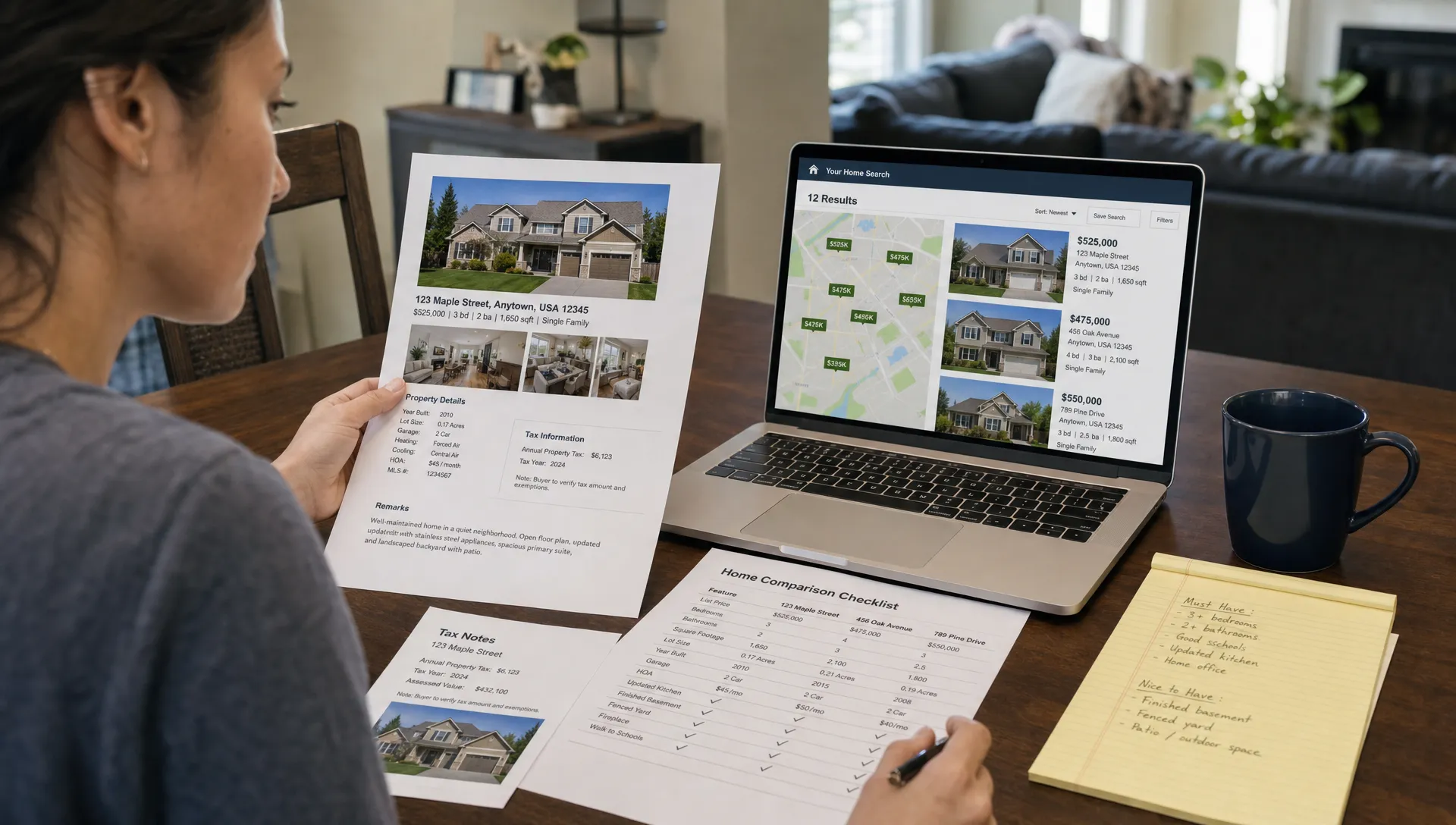
If you are a seller, your MLS remarks should be clear, factual, and compliant with fair housing rules. NetRealtyNow explains the core listing fields in more detail in its guide to what an MLS listing includes and why it matters.
Check Taxes, HOA Fees, and Ownership Costs
The monthly payment is not just principal and interest. Your MLS look up should include a careful review of the costs attached to the property.
Property taxes are often displayed, but confirm whether the figure is annual, estimated, current, or based on a prior assessment. In some areas, a sale can trigger reassessment. In others, exemptions may not carry over to the next owner. If the current owner has a senior, veteran, homestead, agricultural, or other exemption, your future tax bill may be different.
For HOA, condo, or co-op properties, look for the fee amount, payment frequency, included services, rental restrictions, pet rules, parking rules, reserve information, and pending special assessments. The MLS may only show a summary. Full HOA documents, budgets, meeting minutes, and resale packages often reveal more.
Also look for utility type, heating fuel, sewer or septic, water source, solar lease details, special tax districts, ground rent, and private road maintenance. These details can affect both affordability and resale value.
Cross-Check the MLS Against Public Records
A smart MLS look up includes at least one round of outside verification. Public records are not perfect, but they can help you catch mismatches and identify questions before you tour, offer, or list.
Useful records to review include county property tax data, deed history, permit records, zoning maps, flood maps, and local assessment data. If flood risk is relevant, the FEMA Flood Map Service Center is a practical starting point, though buyers may also want an insurance quote and local flood history.
Permit checks are especially important when the listing mentions additions, finished basements, converted garages, decks, pools, or major system upgrades. Unpermitted work can affect financing, insurance, resale, and negotiation. Not every older improvement will have a clean online record, but gaps should prompt questions.
School information should also be verified directly with the school district or local authority. Listing portals may display school ratings or boundaries, but those are not guarantees of enrollment.
For Sellers, Use an MLS Look Up to Audit Your Own Exposure
If you are selling, an MLS look up is not just something buyers do. It is also a quality control step for your marketing. Once your property is live, review how it appears in the MLS feed and on syndicated sites. Check the spelling of the address, map pin, property category, room count, photo order, remarks, showing instructions, and contact process.
This matters because the MLS is often the engine that sends your listing to buyer agents, saved searches, brokerage websites, and consumer portals. NetRealtyNow offers flat fee MLS listing services and full-service brokerage options, which can help sellers get MLS exposure while choosing the level of assistance that fits their needs. If your goal is to reduce unnecessary commission costs, start with the guide on how to list your house on MLS without overpaying.
Online presentation also affects how quickly people understand and trust what they see. The same visibility principles used in real estate marketing are familiar to businesses that invest in custom websites, SEO, and Google Business Profile optimization to make their information easier to find and evaluate. For a home listing, that means accurate data, strong photos, clear descriptions, and consistency across platforms.
Use a Repeatable MLS Look Up Checklist
The best way to avoid missing key details is to review every property the same way. A repeatable checklist keeps emotion from taking over too early and helps you compare homes more fairly.
| Detail to review | Why it matters | Follow-up question |
|---|---|---|
| Listing status | Shows whether the property is available or already under contract | Is the seller still accepting offers or backups? |
| Days on market | Helps identify demand, relists, and pricing issues | Has the property been listed before? |
| Property facts | Confirms beds, baths, size, lot, and property type | What is the source of the square footage? |
| Price history | Shows seller adjustments and market response | Were reductions tied to condition, timing, or competition? |
| Taxes and fees | Affects monthly affordability | Will taxes, HOA fees, or assessments change after sale? |
| Remarks and disclosures | Reveals condition, restrictions, and deal terms | Are there documents supporting the claims? |
| Photos and omissions | Helps identify what needs inspection | Which areas are missing or unclear? |
| Public records | Confirms ownership, permits, zoning, and flood factors | Do records match the MLS listing? |
For buyers, this system helps you decide which homes deserve a showing and which ones need more research. For sellers, it helps you see your property from the buyer's perspective and identify missing information that could slow down interest.
Common MLS Look Up Mistakes to Avoid
Many people miss important details because they move too quickly. The biggest mistake is treating a listing as complete truth instead of a marketing document supported by data that still needs confirmation.
Avoid these common errors:
- Assuming active always means easy to buy.
- Comparing list prices instead of closed comparable sales.
- Ignoring tax exemptions, HOA fees, and assessments.
- Trusting square footage without checking the source.
- Overlooking status changes and relisting history.
- Reading public remarks without looking for supporting documents.
- Forgetting to verify flood zones, permits, and school boundaries.
A careful MLS look up does not eliminate risk, but it helps you ask better questions sooner. That can save time, reduce surprises, and improve your negotiating position.
Frequently Asked Questions
Can anyone do an MLS look up? Consumers can search many MLS-fed listings through brokerage websites and real estate portals, but full MLS access is usually limited to licensed professionals. An agent or listing broker can often provide more complete MLS detail when needed.
Is MLS information always accurate? No. MLS data is valuable, but it can include errors, outdated fields, estimates, or information supplied by sellers and public records. Important details should be verified through inspections, disclosures, county records, HOA documents, and professional advice.
What is the most important detail to check first? Start with the listing status and property identity. If the home is already pending or the listing does not match the correct parcel, unit, or property type, the rest of your analysis may be misleading.
Why do MLS listings look different on different websites? Public websites may display different fields, update at different speeds, or simplify MLS data for consumers. Some details visible to agents may not appear on national portals.
How can sellers check if their MLS listing is working properly? Sellers should review the listing on the MLS-connected platforms where it appears, confirm the core facts are accurate, and make sure photos, remarks, showing instructions, and map placement are correct.
Should I rely on an MLS look up before making an offer? Use it as a strong research tool, but not as your only source. Before making an offer, review disclosures, comparable sales, financing terms, inspection needs, title issues, HOA documents, and local records.
Make Your MLS Research Work Harder
A thorough MLS look up helps buyers avoid costly assumptions and helps sellers understand how their property appears in the market. The key is to move beyond price and photos, then verify status, facts, costs, remarks, history, and outside records.
If you are preparing to sell, NetRealtyNow can help you choose between flat fee MLS listing services and full-service brokerage support in the states where it is licensed. You can get MLS exposure, broker support, and a selling path that fits your level of involvement without overpaying for services you do not need.