
The best homes often attract attention within hours, not days. If you are waiting for a weekend browse to see what is available, you may already be behind the buyers who have alerts, financing, and a showing plan ready before the listing goes live.
Spotting new listings of homes for sale early is not about finding a secret website. It is about building a reliable system that combines MLS-connected alerts, smart search filters, local market awareness, and fast decision-making. The goal is simple: see the right homes sooner, evaluate them quickly, and act before the competition gets organized.
What “new listing” really means in real estate
A home can feel “new” to you even if it has been visible somewhere else first. That is why understanding listing statuses matters. In most markets, the MLS is the primary source that feeds agent searches, broker websites, and many major real estate portals. However, the timing and wording can vary from platform to platform.
Here are the common signals buyers should understand:
| Listing signal | What it usually means | Why it matters |
|---|---|---|
| Active | The home is officially available for showings and offers | This is the main category most buyers track |
| Coming soon | The property is being marketed before active showings begin, where allowed by local MLS rules | It can give you time to prepare before competition spikes |
| Back on market | A previous deal fell through and the home is available again | These can be overlooked opportunities, but you should ask why the deal failed |
| Price change | The seller adjusted the list price | A price drop can reactivate buyer interest quickly |
| Relisted | A property appears again after being withdrawn, expired, or canceled | It may look new on some platforms, but the listing history matters |
Not every market uses the same status labels. For example, New York buyers may see different MLS systems and local practices depending on whether they are searching in NYC, Long Island, Westchester, or upstate markets. If that sounds familiar, NetRealtyNow’s guide to MLS listings in New York explains why local listing systems can vary so much.
Start with MLS-connected alerts, not random browsing
If you want to spot new listings early, your first priority is speed from the source. MLS data typically reaches agents and MLS-connected tools before it spreads across every public portal. That does not mean public sites are useless, but relying on only one consumer app can create gaps.
A strong alert setup usually includes three layers. First, ask a local agent or brokerage to create an MLS-connected search that matches your actual buying criteria. Second, save searches on major portals so you can compare how listings appear across platforms. Third, check local brokerage sites, because many pull MLS data directly and may refresh differently than national portals.
The most common mistake is setting alerts that are either too broad or too narrow. If your search includes every home within 25 miles, you will ignore alerts because most are irrelevant. If your search is too narrow, you may miss a home that would have worked with a small compromise.
For a deeper breakdown of MLS search strategy, review NetRealtyNow’s guide on how to search MLS properties like a pro. The better your search criteria are, the more useful your new-listing alerts become.
Tune your filters so you catch the right homes early
Early access does not help if every alert feels like noise. Your filters should reflect how buyers actually make decisions, not just what sounds ideal on paper.
Start with your non-negotiables. These might include location, maximum price, minimum bedrooms, school district, property type, commute time, or monthly payment ceiling. Then create a second set of “stretch” filters for homes that are close enough to consider. Many buyers miss good opportunities because they search only for their perfect property.
For example, a buyer who wants four bedrooms may want a secondary alert for three-bedroom homes with a den, finished basement, or flexible office space. A buyer who wants a specific neighborhood may want to include adjacent areas where homes sell quickly but offer similar commute or school benefits.
Use this simple framework:
| Filter type | Example | Best use |
|---|---|---|
| Must-have filter | Maximum price, town, property type | Keeps alerts relevant |
| Flexible filter | Bedroom count, lot size, garage, basement | Helps you find near-fit homes others may miss |
| Watchlist filter | Coming soon, back on market, price drops | Surfaces opportunities outside standard active listings |
| Exclusion filter | HOA above a certain amount, flood zone, major road | Reduces wasted showings |
The point is not to lower your standards. It is to avoid letting a rigid search box make decisions for you.
Watch “coming soon,” “back on market,” and price-change activity
Many buyers focus only on brand-new active listings. That is understandable, but it is incomplete. Some of the best opportunities come from listing changes that other buyers overlook.
A “coming soon” listing can help you prepare before showings begin. You may be able to review photos, confirm the location, ask your lender about the price range, and schedule a showing as soon as appointments open.
A “back on market” listing deserves careful attention. Sometimes a buyer’s financing fell through, which may have nothing to do with the house. Other times, inspection problems, appraisal issues, title concerns, or seller inflexibility caused the deal to collapse. Do not assume it is a bargain, but do not ignore it either.
Price changes are also important. A home that was overpriced for two weeks may become competitive after a reduction. When that happens, buyers who already had the property on a watchlist can move faster than those seeing it for the first time.
Understand why listings appear faster in some places than others
Real estate listing visibility is part data distribution and part marketing. Once a property is entered into the MLS, it may syndicate to broker websites, portals, saved searches, and email alerts. But each platform has its own refresh schedule, display rules, and user experience.
That is why serious buyers should think beyond “which app is best?” and ask, “How does information flow in my market?” In digital marketing, speed, clarity, and conversion all shape whether a person notices and acts on an opportunity. The same idea applies to housing searches, and broader digital strategy and conversion optimization principles help explain why the way information is packaged can affect how quickly people respond.
For buyers, the practical takeaway is clear: do not depend on a single feed. If you compare MLS-connected alerts, portal notifications, brokerage websites, and your agent’s updates, you are less likely to miss a serious opportunity.
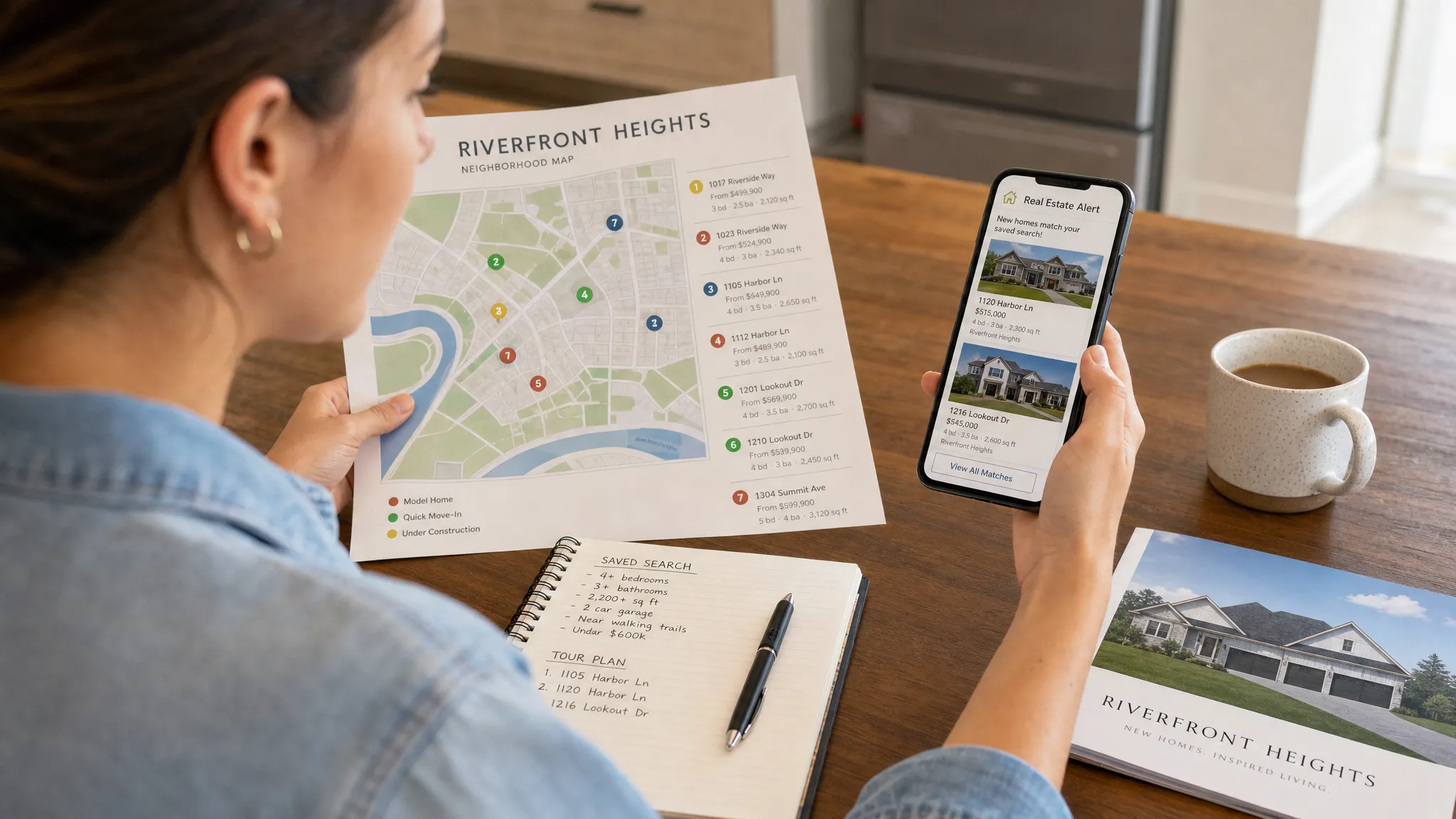
Build a daily routine that gives you a timing advantage
Spotting new listings early is partly about discipline. In a fast market, you need a repeatable routine that takes minutes, not hours.
A practical schedule looks like this:
| Time | What to check | What to do next |
|---|---|---|
| Morning | Overnight MLS and portal alerts | Flag homes that meet your must-have criteria |
| Midday | New active listings and coming-soon updates | Ask your agent about showing availability |
| Late afternoon | Price changes and back-on-market listings | Decide whether to tour after work or the next morning |
| Evening | Saved homes, disclosures, commute, taxes | Shortlist properties worth pursuing |
This routine works best when everyone involved knows their role. If you are buying with a spouse, partner, or family member, decide in advance who checks alerts, who contacts the agent, and who reviews financing impact. Delays often happen because buyers are trying to coordinate after the right home appears.
Also, keep a simple notes document or spreadsheet. Track the address, list price, alert time, showing availability, first impression, concerns, and next step. After a few weeks, you will start to recognize pricing patterns and move faster with more confidence.
Evaluate a new listing in 10 minutes
Seeing a listing early only matters if you can judge it quickly. You do not need to know everything in the first 10 minutes, but you should know whether it deserves immediate action.
Start with location. Confirm the exact map position, commute, school district if relevant, nearby roads, transit, flood considerations, and neighborhood fit. Then review the numbers. Look beyond list price and estimate the monthly cost, including taxes, insurance, HOA fees, utilities, and likely maintenance.
Next, study the photos and description carefully. Watch for signs of deferred maintenance, limited room photos, unusual wording, or missing details. Phrases like “needs TLC,” “as-is,” or “investor special” may be perfectly fine for some buyers, but they should trigger more questions.
A fast review should answer these questions:
- Does it fit my required location and budget?
- Is the property type acceptable for my financing?
- Are there obvious condition concerns?
- Is showing access available soon?
- Is this worth contacting my agent about immediately?
If the answer is yes, act quickly. You can always decide not to offer after the showing, but you may not get a second chance to be early.
Get financially ready before the right home appears
The buyers who win fast-moving listings are usually prepared before the alert arrives. A pre-approval letter, proof of funds, clear budget, and lender availability can make the difference between touring confidently and scrambling.
Before you begin tracking new listings of homes for sale, speak with your lender about your real price range. Ask how taxes, HOA fees, insurance, interest rates, and down payment changes affect your monthly payment. This helps you avoid wasting time on homes that look affordable online but do not fit your actual numbers.
You should also know your offer comfort zone. In a competitive market, you may need to decide quickly whether you are willing to offer at list price, above list price, or with specific terms. That does not mean waiving every protection. It means understanding your options before emotions take over.
Important documents to have ready include your pre-approval letter, proof of funds for down payment and closing costs, lender contact information, and any required buyer agency paperwork in your state. Requirements vary, so confirm with a licensed real estate professional in your market.
Move quickly, but do not skip due diligence
Speed is useful. Panic is expensive.
When a promising new listing appears, contact your agent, request disclosures if available, and schedule the earliest practical showing. If you like the home, ask for comparable sales, offer deadline information, known seller preferences, and any issues the listing agent is willing to share.
Be especially careful with homes that have been relisted, returned to market, or priced below nearby sales. There may be a good reason, or there may be a serious issue. Your agent can help you investigate listing history, prior contract activity where available, permit questions, inspection concerns, and local norms.
The right balance is to move fast on reversible steps and slow down on irreversible ones. Scheduling a showing quickly is low risk. Submitting an offer without understanding financing, condition, or contract terms is not.
Use local signals beyond the big portals
Public portals are convenient, but they are not the whole market. Local signals can help you spot activity before it becomes obvious.
Drive the neighborhoods you like and note coming-soon signs, contractor activity, estate sale signs, and homes being cleaned out or staged. Follow local brokerage pages, community groups, and open house announcements. Ask your agent which listing agents are active in your target area and whether certain neighborhoods tend to list on specific days.
For sale by owner properties can also be worth monitoring, although buyers should be careful about pricing, disclosures, and representation. If you want to include this part of the market in your search, NetRealtyNow has a helpful guide on how to find homes for sale by owner near you.
Do not treat rumors as facts. A neighbor mentioning that someone “might sell soon” is not the same as a listing. Respect privacy, avoid pressure tactics, and rely on licensed professionals for offer strategy and contract guidance.
What sellers should learn from early-listing behavior
If you are selling, buyer behavior around new listings matters. Many serious buyers have saved searches, MLS alerts, and portal notifications ready. That means your first impression can happen almost instantly.
A weak launch can cost attention. Poor photos, missing details, unclear showing instructions, or inaccurate MLS data may cause buyers to skip your home before they ever visit. A strong launch gives the listing a better chance to trigger relevant alerts, earn saves and showing requests, and reach motivated buyers quickly.
This is where MLS exposure becomes important. NetRealtyNow explains how real estate listing sites help sell homes faster by increasing visibility across the places buyers and agents already search. Sellers who use a flat fee MLS listing can still benefit from broad exposure while maintaining more control over commission costs.
Common mistakes that make buyers late
Most buyers do not miss homes because they are lazy. They miss homes because their process is too slow or scattered.
Avoid these common problems:
- Relying on only one real estate app
- Waiting until the weekend to review alerts
- Using filters so narrow that good homes never appear
- Ignoring back-on-market and price-change listings
- Touring without a current pre-approval
- Taking too long to decide who will contact the agent
- Focusing only on list price instead of total monthly cost
The fix is not to spend all day refreshing websites. The fix is to create a system that surfaces the right homes and helps you respond calmly.
Frequently Asked Questions
How fast do new listings of homes for sale appear online? Timing varies by market, MLS rules, and platform. MLS-connected alerts may appear quickly after entry, while public portals can update on different schedules. Using multiple alert sources reduces the chance of missing a listing.
Is the MLS always faster than Zillow or Realtor.com? Often, the MLS is the original source for broker and agent data, but public portals can still be useful. The best approach is to combine MLS-connected alerts with saved searches on major sites and local brokerage websites.
What is the best time of day to check for new home listings? Many buyers check in the morning, midday, and early evening. Listing timing varies, so consistency matters more than one perfect time. In competitive markets, same-day review is important.
Are coming-soon listings worth tracking? Yes, where they are allowed and available. Coming-soon listings can give you time to review location, budget, and showing plans before the home becomes fully active.
Should I make an offer immediately when I see a new listing? Not before basic due diligence. Move quickly to schedule a showing and review disclosures, comparable sales, financing, and property condition. Acting fast should not mean acting blindly.
Ready to use MLS exposure to your advantage?
Whether you are buying or selling, timing and visibility matter. Buyers need fast access to accurate listing information. Sellers need their homes to appear where serious buyers and agents are already searching.
NetRealtyNow offers flat fee MLS listing services and full-service brokerage options designed to help sellers maximize exposure while saving on commissions. Listings can be distributed across 80+ portals, with broker support available. If you are preparing to sell, explore NetRealtyNow to see how MLS visibility can help your property reach buyers who are watching for the next new listing.