
Selling a home becomes stressful when too many decisions hit at once: price, repairs, disclosures, photos, showings, offers and closing deadlines. The better way to list a house is to make the important choices before the listing goes live, not while buyers are already asking for appointments.
A calm listing process does not mean doing everything perfectly. It means knowing which tasks affect buyer confidence, which ones protect you legally and which ones can be handled with the right support. Use the plan below to prepare your home, your paperwork and your expectations before you go public.
Start With the Selling Path That Fits Your Situation
Before you clean, stage or take photos, decide how much help you want. The selling path you choose affects your workload, your commission costs and how much professional guidance you will have during pricing, negotiation and closing.
Some sellers are comfortable managing showings and communicating directly with buyers or buyer agents. Others want an agent to handle most of the process. Many fall somewhere in between: they want MLS exposure and broker support, but they do not want to pay more than necessary for tasks they can handle themselves.
| Selling path | Best fit | Seller workload | Stress risk |
|---|---|---|---|
| FSBO without MLS | Sellers with strong local buyer demand and real estate experience | High | High if buyer traffic is limited |
| Flat fee MLS | Sellers who want MLS exposure while staying more involved | Moderate | Lower if pricing and paperwork are prepared |
| Full-service brokerage | Sellers who want agent assistance from launch to closing | Lower | Lower, but usually higher commission cost |
| Hybrid or limited-service support | Sellers who want help with specific steps such as listing or negotiation | Moderate | Depends on the services included |
If cost control is part of your goal, compare your options before choosing a service model. NetRealtyNow’s guide to how to list a house for sale without paying too much explains how flat fee MLS, hybrid support and full-service brokerage options differ.
Build a Pre-Listing Runway, Not a Last-Minute Rush
The most stressful listing week is usually the one that started too late. Sellers often underestimate how long it takes to gather documents, make small repairs, approve photos, write listing details and coordinate family schedules around showings.
A simple timeline can prevent that scramble. You do not need a complicated project management system. You need a realistic calendar and a few firm deadlines.
| Time before listing | What to complete | Why it lowers stress |
|---|---|---|
| 4 to 6 weeks | Choose your selling path, review mortgage payoff, study recent sales and walk through the home as a buyer would | Gives you time to fix issues before pricing and photos |
| 2 to 3 weeks | Declutter, handle minor repairs, gather HOA documents, review required disclosures and schedule cleaning | Prevents delays when the listing is ready to launch |
| 1 week | Take photos, confirm showing rules, verify listing facts and prepare a seller net sheet | Reduces errors and makes buyer inquiries easier to answer |
| 24 to 48 hours | Final cleaning, remove valuables, check lights, approve listing copy and confirm launch timing | Helps the home show well from day one |
For a broader step-by-step framework, you can pair this preparation plan with NetRealtyNow’s home selling checklist, then customize it based on your property, state requirements and preferred level of help.
Price the Home Before You Polish the Details
Repairs and staging matter, but pricing shapes the first wave of buyer attention. A beautiful listing can still sit if the price is disconnected from recent comparable sales. A less glamorous home can attract serious buyers if it is positioned correctly.
Start with recent closed sales near your property, then compare active and pending listings. Closed sales show what buyers actually paid. Active listings show your competition. Pending listings can signal where the market is moving, although final terms are often unknown until closing.
A practical pricing review should account for location, property type, square footage, bedroom and bathroom count, lot size, condition, updates, parking, HOA fees and nearby competing inventory. Do not price only from what you need to net or what a neighbor asked for six months ago. Buyers compare homes in real time, and appraisers look for supportable value.
If your price estimate lands in a range, choose your strategy before launch. A slightly sharper price may generate more early activity. A higher test price may leave room for negotiation, but it can also reduce showings if buyers see better value elsewhere. Neither strategy is automatically wrong. The key is choosing deliberately, then tracking feedback.
Prepare the Home for Buyer Confidence
Preparing to list a house does not require turning it into a model home. It requires removing avoidable doubts. Buyers make quick judgments from small signals: a sticky door, stained carpet, dim hallway, overgrown entry or cluttered countertop can suggest broader maintenance problems even when the house is structurally sound.
Focus first on items that affect trust and visibility. Clean thoroughly, repair obvious defects, improve lighting and make the home easy to walk through. Decluttering is not just cosmetic. It helps buyers understand room size, storage and flow.
A few preparation priorities usually deliver more value than broad, expensive upgrades:
- Fix visible maintenance issues such as loose handles, dripping faucets, damaged trim, burned-out bulbs and sticking doors.
- Remove excess furniture, personal items and countertop clutter so rooms photograph larger and feel calmer.
- Deep clean kitchens, bathrooms, flooring, windows and entry areas because buyers notice these immediately.
- Improve curb appeal with trimmed landscaping, a clean walkway, fresh mulch where appropriate and a neat front door area.
- Stage key spaces for clear purpose, especially living rooms, bedrooms, dining areas and home office spaces.
Avoid making every possible improvement unless the market clearly rewards it. A full remodel right before selling can drain time and cash, especially if the buyer would have chosen different finishes.
Gather Paperwork Before Buyers Ask
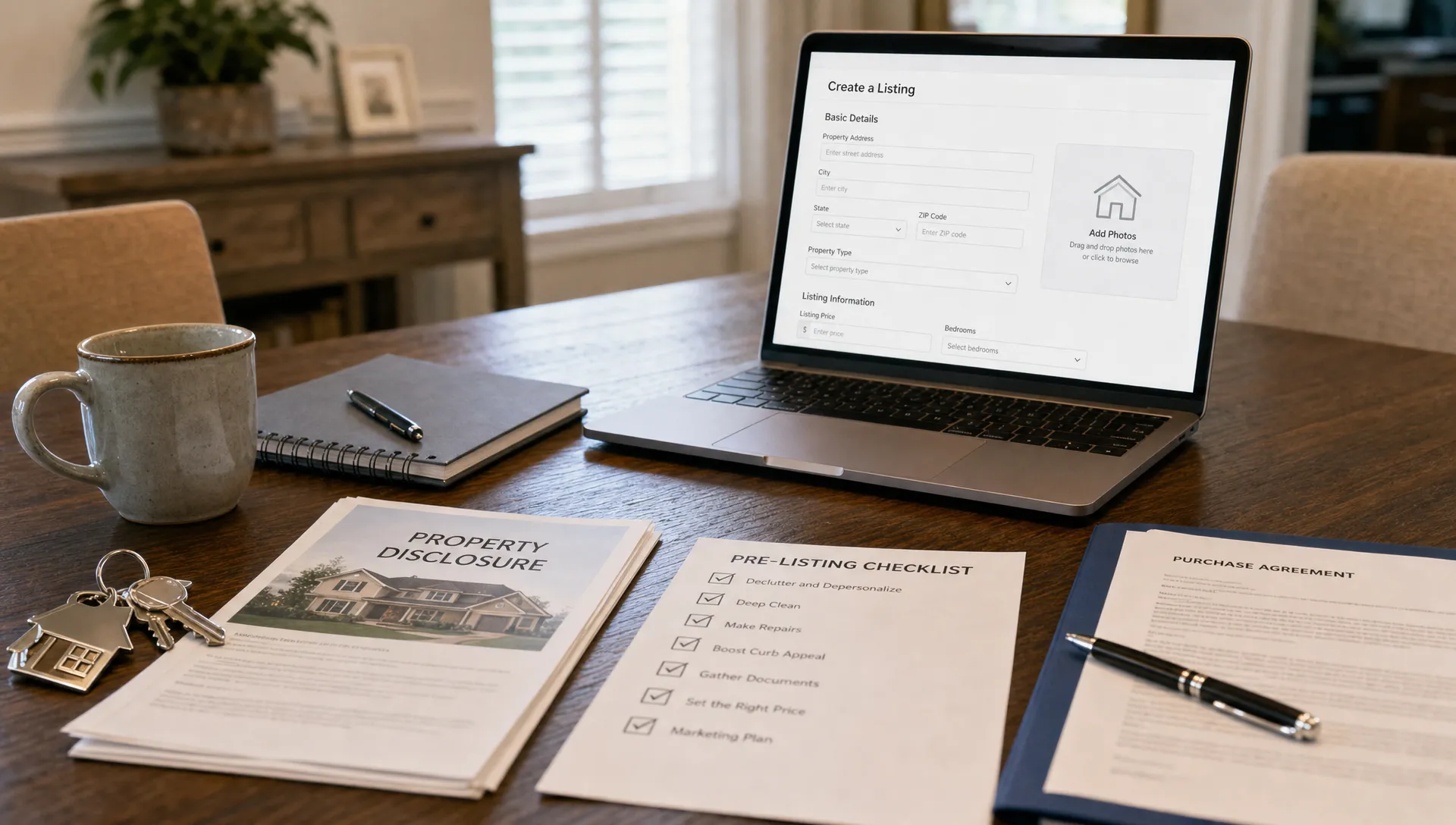
Missing paperwork creates stress at the worst time: after a buyer is interested. Some documents are needed for listing accuracy. Others help answer buyer questions, satisfy legal requirements or keep closing on schedule.
Requirements vary by state and property type, so confirm local rules with a licensed professional. Still, many sellers benefit from preparing the same core documents early.
| Document or information | Why it helps |
|---|---|
| Mortgage payoff estimate | Helps you calculate expected net proceeds |
| HOA or condo documents | Clarifies fees, rules, rental limits and transfer requirements |
| Survey or plat, if available | Helps answer boundary or lot questions |
| Utility averages | Gives buyers a clearer picture of ownership costs |
| Warranty information | Supports claims about newer appliances, roof, HVAC or other systems |
| Permit records for major work | Helps reduce concerns about renovations or additions |
| Property tax information | Helps buyers estimate monthly costs |
| Seller disclosure forms | Reduces delays and protects against avoidable disputes |
Federal rules also apply in some cases. For homes built before 1978, sellers generally must provide lead-based paint disclosures and an EPA-approved pamphlet. The EPA’s real estate disclosure guidance explains these requirements in more detail.
Write the Listing for Buyers, Agents and Search Filters
Your listing has two jobs. It must be accurate enough for the MLS and compelling enough for buyers scrolling through portals. According to the National Association of Realtors Profile of Home Buyers and Sellers, online search plays a central role in how buyers find homes, which means your photos, remarks and property fields carry real weight.
Accuracy comes first. Confirm square footage, property type, lot size, school information, tax details, HOA fees, included appliances, parking, room counts and any restrictions before the listing is published. Incorrect details can frustrate buyers, create negotiation problems or trigger compliance issues.
The listing description should lead with the most meaningful features, not a string of vague adjectives. Mention layout, updates, outdoor space, storage, parking, commuter access or neighborhood amenities when they are accurate and relevant. Avoid language that could violate fair housing rules or steer buyers based on protected characteristics. If you are unsure, ask your broker or agent to review the wording.
Photos should tell the story of the home in a logical order: exterior, entry, main living spaces, kitchen, bedrooms, bathrooms, outdoor areas and any notable features. Clean, bright photos taken from natural angles usually outperform overly edited images that make rooms look distorted. The goal is not to trick buyers into visiting. The goal is to help qualified buyers understand the home quickly.
Decide Your Showing Rules Before Launch
Showings can become the most disruptive part of selling if you improvise each appointment. Decide the rules before the listing goes live so you can respond quickly without feeling like your schedule is being controlled by strangers.
Think through notice requirements, available showing hours, pet arrangements, child schedules, remote work needs, alarm instructions, lockbox access and how you will secure valuables. If the home is occupied, create a quick reset routine for each showing: lights on, blinds open, counters clear, beds made, trash removed and personal documents out of sight.
Access matters. If buyers cannot see the home easily, some will move on to the next option. That does not mean you must accept every last-minute request, but overly restrictive showing windows can reduce activity. Balance safety and convenience with the reality that motivated buyers often tour several homes in a short period.
After each showing, track feedback. One negative comment may not matter. Repeated comments about price, smell, darkness, layout confusion or condition deserve attention. Feedback is not always pleasant, but it can help you adjust before the listing loses momentum.
Know What Happens After the Home Is Listed
The first week on the market can feel intense because buyer portals, agents and saved searches may all notice the listing at once. Early activity does not guarantee an offer, and slower activity does not always mean failure. It does mean you need a plan for interpreting the signals.
If the listing gets views but few showings, the photos, price, location or property details may be filtering buyers out. If it gets showings but no offers, buyers may like the home but hesitate because of condition, pricing, layout or competition. If offers come quickly, you still need to compare terms carefully rather than reacting only to the highest number.
For a deeper look at the post-launch phase, NetRealtyNow explains what happens after your home is listed, including visibility, showings, offers, inspection, appraisal and closing steps.
Compare Offers by Net Proceeds and Risk
The highest offer is not always the strongest offer. A lower offer with solid financing, fewer contingencies and a clean closing timeline may be more attractive than a higher offer with uncertain terms. Your job is to compare both money and risk.
Before offers arrive, decide how you will evaluate them. This helps you avoid rushed decisions, especially in a competitive situation.
| Offer term | Why it matters | Question to ask |
|---|---|---|
| Purchase price | Sets the headline value | What will I net after concessions and costs? |
| Financing type | Affects approval timeline and appraisal risk | Is the buyer preapproved and well qualified? |
| Earnest money | Shows buyer commitment | Is the deposit meaningful for this price point? |
| Inspection contingency | Can lead to repair requests or renegotiation | How long is the inspection period? |
| Appraisal contingency | Matters when price exceeds recent comparable sales | What happens if the appraisal comes in low? |
| Closing date | Affects your move and payoff timing | Does this date fit my next step? |
| Possession terms | Determines when the buyer takes occupancy | Do I need a rent-back or extra time to move? |
| Seller concessions | Reduces your net proceeds | How much is the buyer asking me to contribute? |
This is where professional support can reduce stress. Contract terms can have consequences long after the offer is signed. If you are using a flat fee MLS or limited-service option, confirm what negotiation or contract guidance is included before you need it.
Avoid the Most Common Stress Traps
Most seller stress comes from predictable mistakes. You can avoid many of them with preparation and realistic expectations.
- Listing before the home is clean, photographed and fact-checked.
- Overpricing with the assumption that buyers will simply negotiate down.
- Spending money on upgrades that do not change buyer perception or appraised value.
- Staying home during showings, which can make buyers uncomfortable.
- Treating verbal enthusiasm as an offer before written terms are submitted.
- Ignoring repeated feedback because it conflicts with your personal opinion of the home.
- Waiting until the last minute to understand closing costs, payoff amounts and moving logistics.
A home sale is emotional, especially if you have lived in the property for years. Preparation gives you a buffer between emotion and decision-making. You can still care about the outcome without reacting to every comment or showing request as a personal judgment.
Choose the Right Help Before You Need It
The best support level depends on your time, experience, market and comfort with negotiation. If you want more control and lower selling costs, a flat fee MLS service may be enough, especially if broker support is included. If your sale is complicated, you are relocating under pressure or you prefer a professional to manage the process, full-service brokerage may be worth considering.
NetRealtyNow offers flat fee MLS listing services and full-service real estate brokerage options, helping sellers get broad exposure while choosing the level of assistance that fits their situation. Listings can appear on the MLS and 80+ portals, with broker support included in the service model. The company is licensed in five states, so availability and specific services depend on your location.
The main point is simple: do not wait until you are overwhelmed to decide how much help you need. Choose the structure early, prepare the listing carefully and know who you will call when questions come up.
Frequently Asked Questions
How early should I start preparing before I list a house? Most sellers should start at least 2 to 4 weeks before listing, and 4 to 6 weeks is better if repairs, decluttering or document gathering will take time. The goal is to have pricing, photos, disclosures and showing rules ready before launch.
Do I need to repair everything before listing? No. Focus on visible maintenance issues, safety concerns and defects that could reduce buyer confidence. Major upgrades should be evaluated against likely return, timing and buyer expectations in your local market.
What is the most stressful part of listing a house? For many sellers, the most stressful part is not one task but the combination of pricing pressure, showings, feedback and offer decisions. A clear plan for each stage makes the process easier to manage.
Can I list a house on the MLS without using a traditional full-service agent? In many markets, sellers can use a flat fee MLS service through a licensed broker. This can provide MLS exposure while allowing the seller to stay more involved, though service levels vary.
What should I do if my listing gets views but few showings? Review the price, photos, first impression, showing availability and competing listings. Views without showings often mean buyers are noticing the home online but choosing not to take the next step.
List With a Plan, Not a Scramble
A smoother sale starts before the listing goes live. Price with evidence, prepare the home for buyer confidence, gather documents early, write an accurate listing and decide how you will handle showings and offers.
If you want MLS exposure, broker support or a full-service option depending on your needs, NetRealtyNow can help you choose a selling path that fits your goals while keeping the process more organized from the start.