
A home listing can look polished online and still leave buyers with unanswered questions. Is the property actually available? Does the square footage match public records? Has the price changed three times in the last month? Are there HOA fees, disclosure notes or status updates that a public website has not refreshed yet?
That is where MLS Realtor listings become valuable. They do not replace inspections, appraisals, title work or legal review, but they give buyers a more structured way to verify a home before spending time, money and emotional energy on an offer.
For buyers, the MLS is not just a search tool. It is a fact-checking layer.
What MLS Realtor Listings Are Really Designed to Do
A Multiple Listing Service, usually called the MLS, is a shared database used by licensed real estate professionals to enter, update and distribute property listing information. A Realtor or agent enters the listing details according to local MLS rules, then that information is used by buyer agents, brokerage websites and many public real estate portals.
The MLS exists to make listing data more consistent and accessible across the local real estate market. That consistency matters because a buyer is rarely verifying just one fact. A serious buyer needs to confirm property identity, availability, pricing, basic features, listing history and transaction terms.
If you want a fuller explanation of the listing pipeline, NetRealtyNow has a helpful overview of how MLS listings work, including how listings are entered and distributed.
An MLS listing is still created by humans and can contain errors. It may also include information supplied by the seller, tax records or third-party sources. The advantage is that the MLS gives agents a standardized place to update and correct the record. Compared with a random social post or stale portal listing, that can make a significant difference when a buyer is trying to verify whether a home is worth pursuing.
Why MLS Data Is More Reliable Than a Casual Online Listing
Public real estate portals are useful, especially for broad browsing. The problem is that many public sites pull data from multiple sources and may not update at the same speed as the local MLS. A home could appear active on a portal even after it has gone under contract. A price cut might display on one site but not another. Photos, remarks or open house details may lag behind the current listing record.
MLS Realtor listings are closer to the source. The listing broker is responsible for entering and maintaining the listing, and local MLS rules often require timely updates when status, price or key terms change. That does not make the MLS perfect, but it gives buyers and their agents a better starting point for verification.
The MLS also creates a shared reference point. When a buyer agent, listing agent, lender, appraiser and transaction coordinator are discussing the property, the MLS number and MLS sheet help everyone talk about the same home with the same baseline information.
Key Home Details Buyers Can Verify Through the MLS
A strong MLS record helps buyers separate what is known, what is claimed and what still needs to be checked. The most useful fields vary by local MLS, but many listings include several categories of information that help buyers make better decisions.
| MLS detail | How it helps buyers verify the home | What still needs a second check |
|---|---|---|
| MLS number | Confirms the listing record and helps agents reference the exact property | Make sure the MLS number matches the address you are touring |
| Address and parcel details | Helps confirm the property identity and location | Compare with county property records and title documents |
| Listing status | Shows whether the home is active, pending, under contract or closed | Ask an agent to confirm status if you are close to making an offer |
| List price and price changes | Shows current asking price and recent adjustments | Compare with comparable sales, not just the asking price |
| Beds, baths and square footage | Helps screen whether the property fits your needs | Verify square footage source, permits and appraiser measurements |
| Property type and lot size | Clarifies whether the home is detached, condo, townhouse or another type | Confirm legal property type, boundaries and HOA documents |
| HOA or condo information | Flags possible monthly fees, rules or association involvement | Review resale packets, budgets and governing documents |
| Public and agent remarks | May mention improvements, exclusions, showing rules or seller preferences | Confirm all material claims in writing during due diligence |
| Days on market and listing history | Helps buyers understand demand and possible pricing issues | Ask why the listing was withdrawn, relisted or reduced if patterns look unusual |
For a deeper field-by-field breakdown, NetRealtyNow explains what an MLS listing includes and why it matters. Buyers do not need to memorize every MLS field, but they should know which ones can change the risk profile of a home.
How Buyers Can Use MLS Listings Before a Showing
Before touring a property, buyers can use MLS data to avoid wasting time on homes that do not match their needs or may already be unavailable. This is especially useful in competitive markets where buyers may feel pressure to move quickly.
Start with the listing status. If a home is marked active, it may be available for showings and offers. If it is active under contract, pending or contingent, the seller may already have accepted an offer. Local terminology varies, so ask your agent what each status means in that MLS.
Next, check whether the property facts support the way the home is being marketed. A listing may advertise a finished lower level, guest suite or extra room, but the MLS details and public records may tell a more complicated story. If a bedroom count depends on a basement room, for example, buyers should verify whether it meets local requirements and whether the finished space was permitted.
Then compare the listing price with recent activity. A price reduction may suggest the seller is adjusting to market feedback. A very recent relist may reset public days on market, but the MLS history may still reveal earlier attempts to sell. These details do not automatically mean a home is a bad choice. They simply give buyers better questions to ask.
Buyers who are actively searching can also use MLS alerts more strategically. Instead of relying only on broad portal filters, ask your agent to set up searches based on the fields that actually matter to you, such as property type, school boundary, HOA status, lot size, basement type or commute area. NetRealtyNow’s guide on how to search MLS listings more effectively covers practical ways to refine those searches.
What MLS Realtor Listings Cannot Prove on Their Own
The MLS is an excellent verification tool, but it is not a guarantee. Buyers should treat it as the beginning of diligence, not the end.
An MLS listing generally cannot prove that every renovation was permitted, that the roof will last another decade or that the basement has never had water issues. It may not fully explain neighborhood restrictions, future special assessments, insurance challenges or property boundary concerns. Some MLS fields may rely on seller statements or tax records that are incomplete or outdated.
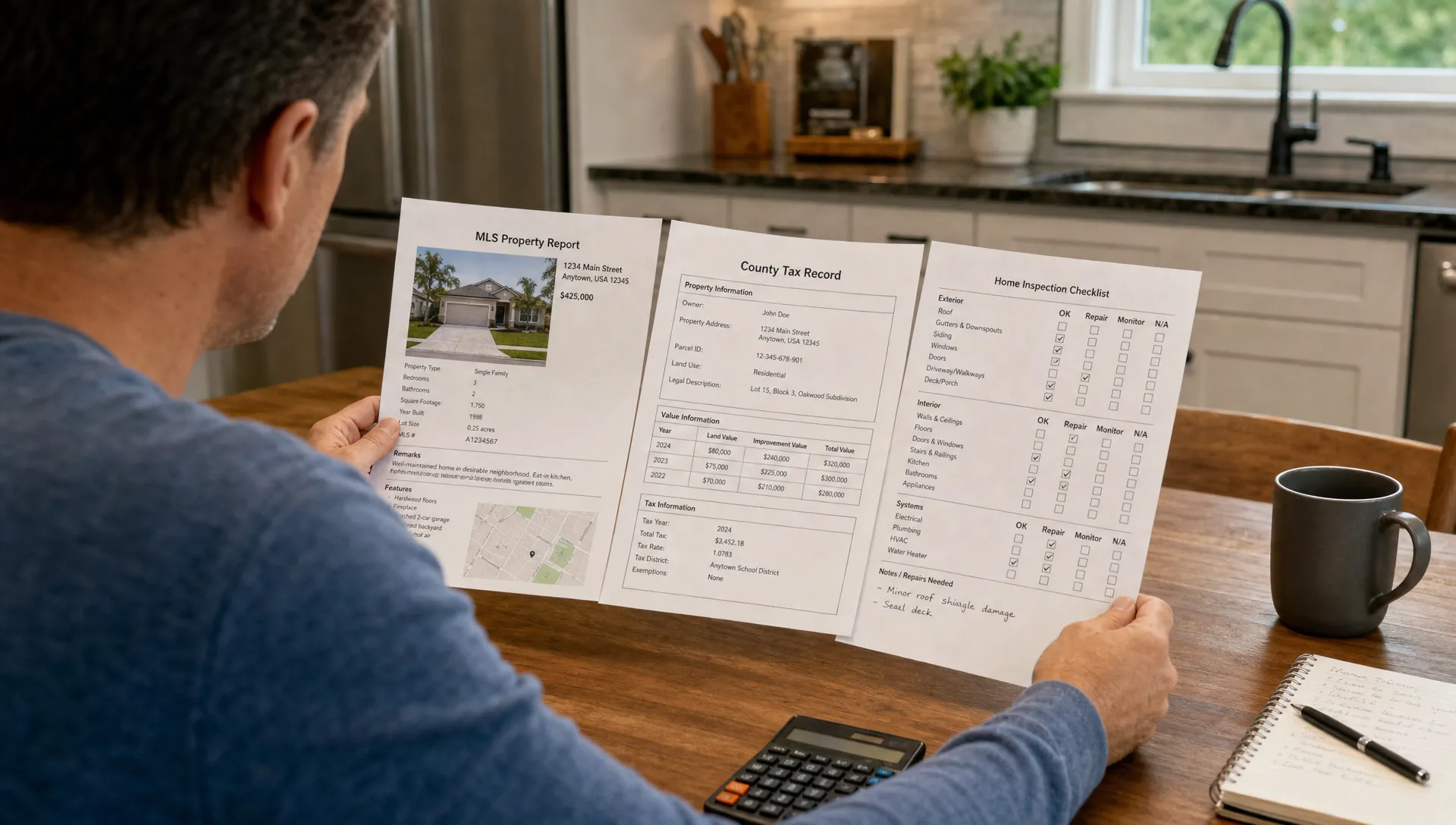
That is why buyers should cross-check MLS information against other sources. County property records can help confirm ownership history, assessed value, tax data and parcel information. Local permit offices may provide records for additions, major mechanical work or finished spaces, depending on the jurisdiction. HOA and condo documents can reveal rules, fees, reserves and pending assessments that are not fully captured in a listing summary.
Professional inspections are also essential. A clean MLS description does not mean the home is free of defects. An inspector can evaluate visible systems and conditions, then help buyers decide whether to negotiate repairs, ask for credits or walk away. For financing, the lender’s appraisal process provides another independent review of value, although an appraisal is not the same as a condition inspection.
Buyers should also check flood risk and insurance availability early. The FEMA Flood Map Service Center can help buyers review mapped flood zones, but insurance pricing and property-specific risk should be discussed with an insurance professional. This is especially important before removing contingencies or committing nonrefundable funds.
MLS Red Flags Buyers Should Investigate
Some MLS details are not necessarily problems, but they deserve follow-up. Buyers should pause and ask more questions when they see patterns like these:
- A listing that appears active on a public site but is pending or under contract in the MLS
- Square footage that differs significantly from tax records, floor plans or prior listings
- “As is” language without clear disclosure context
- Very limited photos or photos that avoid key rooms and exterior areas
- Repeated withdrawals, relists or large price changes without explanation
- HOA fees listed as unknown, approximate or inconsistent across documents
- Public remarks that promote upgrades but do not identify permits, dates or documentation
- Cash-only terms, short sale language or unusual seller conditions
None of these signs automatically disqualify a home. A seller may have valid reasons for limited photos, a relist or an as-is sale. The point is that MLS Realtor listings help buyers notice inconsistencies early enough to investigate before making a binding decision.
How a Buyer Agent Helps Interpret MLS Data
Many buyers can see listing information online, but a buyer agent can often access more complete MLS details and interpret local status rules. This matters because the same phrase may mean different things in different markets.
For example, “contingent” might mean the seller has accepted an offer but certain conditions remain open. In another market, a similar status could mean showings continue and backup offers are welcome. A buyer agent can call the listing agent, confirm whether the seller is still considering offers and explain how local contract customs affect your strategy.
A buyer agent can also review comparable sales, not just active listings. Active listings show seller expectations. Closed sales show what buyers actually paid. When MLS data includes listing history, concessions, closing dates and prior price changes, the buyer’s offer strategy becomes more grounded.
This is especially useful when a home looks attractive online but the MLS record reveals complications. Maybe the property has been pending twice and returned to market. Maybe the listed square footage includes a finished basement while comparable sales do not. Maybe the seller needs a rent-back after closing. These details can affect price, timing and negotiation terms.
How Sellers Benefit When Buyers Can Verify the Home
Although this article focuses on buyers, accurate MLS verification also helps sellers. Serious buyers are more likely to move forward when listing data is complete, consistent and easy to confirm. Confusion creates friction. Clear MLS information can reduce unnecessary questions, improve showing quality and support a smoother negotiation.
For sellers who want MLS exposure without paying a traditional full listing commission, NetRealtyNow offers flat fee MLS listing services as well as full-service brokerage options in its licensed markets. The goal is simple: make the home visible where buyers and agents are already looking while giving sellers options for the level of support they want.
Good MLS data does not make every home sell instantly, and it cannot overcome major pricing or condition issues. It does help buyers trust that the listing is real, current and worth evaluating. In a market where buyers compare homes quickly, that trust can be a meaningful advantage.
Frequently Asked Questions
Are MLS Realtor listings always accurate? No. MLS listings are generally more structured and current than casual online listings, but they can still contain errors or outdated information. Buyers should verify important details through public records, disclosures, inspections, appraisals and their agent.
Can buyers access the MLS directly? In most markets, full MLS access is limited to licensed real estate professionals. Buyers often see MLS-fed data through agent portals, brokerage websites or public real estate sites, but an agent may be able to provide more complete or current details.
What is the most important MLS detail to verify first? Listing status is usually the first detail to verify. If a home is pending, contingent or under contract, it may not be available in the way a public website suggests. After status, buyers should confirm address, price, property facts and any HOA or disclosure information.
Does an MLS listing replace a home inspection? No. An MLS listing describes and markets the property, but it does not evaluate the home’s condition in the way a professional inspection does. Buyers should use inspections and other due diligence steps before committing to a purchase.
Why do MLS details sometimes differ from public real estate sites? Public sites may receive data through feeds that update at different times or from different sources. The MLS is usually closer to the listing source, but buyers should still ask their agent to confirm any time-sensitive details.
Make MLS Data Work for Your Next Move
MLS Realtor listings help buyers verify a home by creating a clearer, more consistent record of the property before an offer is made. The best buyers use that record to ask sharper questions, confirm key facts and avoid relying on incomplete public information.
If you are selling, accurate MLS exposure can make your home easier for serious buyers to trust and evaluate. NetRealtyNow helps sellers list on the MLS through flat fee and full-service brokerage options in its licensed markets, giving homeowners a practical way to reach buyers while keeping more control over their selling costs.