
Most sellers know their home needs to appear online. Fewer understand that the most important online placement is often not a public portal by itself, but the local MLS that powers what agents and many buyers see every day.
Local MLS access helps sellers reach more buyers by listing properties in a cooperative database used by real estate professionals, ensuring broad exposure to serious, intent-driven buyers. A Multiple Listing Service (MLS) feeds into agent workflows, automated alerts, and numerous brokerage websites via IDX, or Internet Data Exchange. The National Association of Realtors consistently reports that both online search and real estate agents are central to homebuying, making MLS exposure powerful for connecting properties with active buyers and their agents. Ultimately, local MLS access provides sellers with better timing and a stronger chance that the right buyer sees their home while interest is highest.
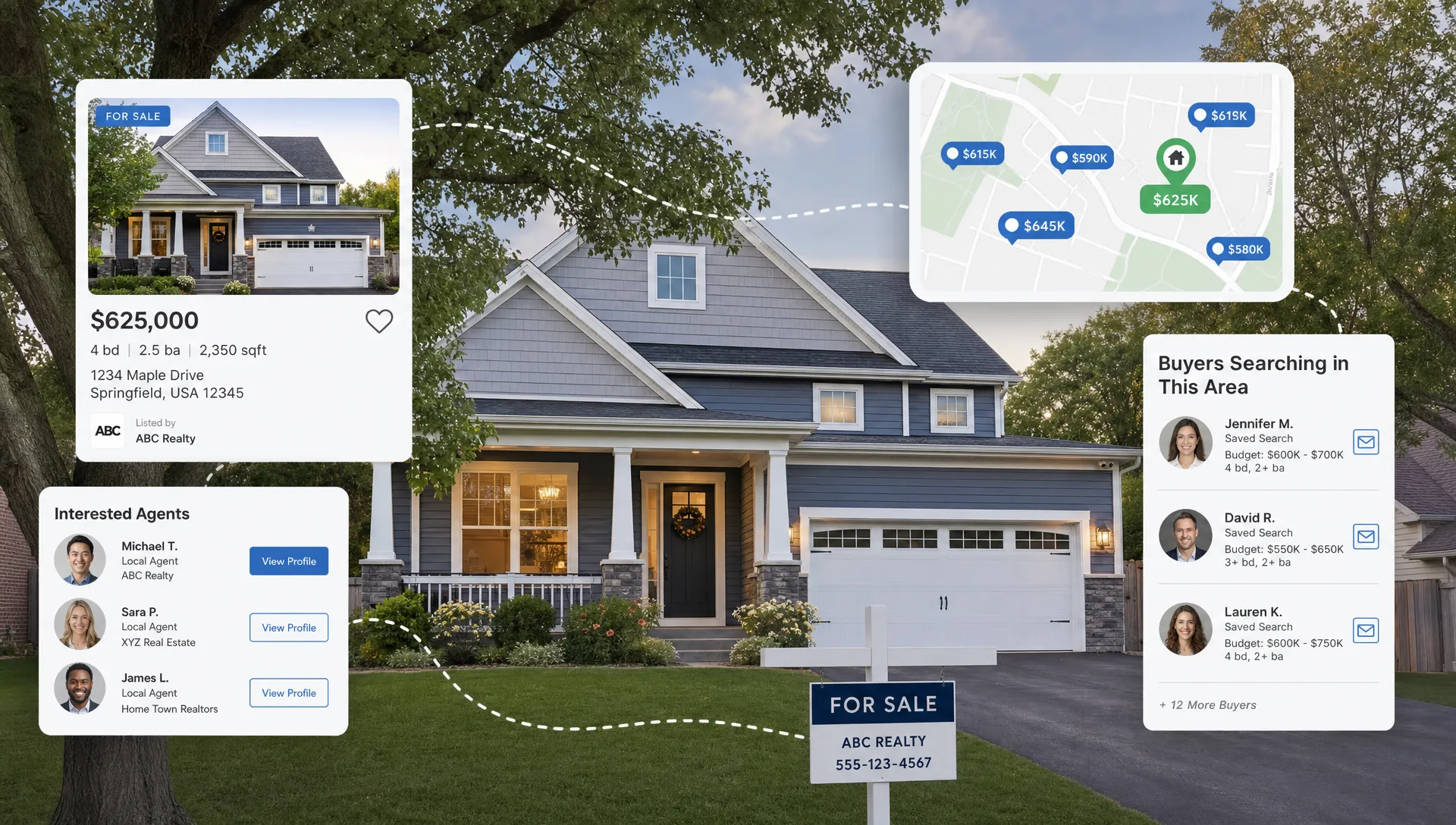
Local MLS access helps a listing reach the people most likely to act: buyers searching in your exact area, buyer agents setting up automated alerts, relocation shoppers watching a narrow price band, and local broker websites pulling fresh inventory directly from MLS data feeds. For sellers, that means broader exposure, better timing, and a stronger chance that the right buyer sees the home while interest is highest.
What local MLS access actually means
An MLS, or Multiple Listing Service, is a cooperative listing database used by real estate professionals in a defined market or region. Local MLS access means your property is entered into the MLS that serves your home’s area, with the fields, photos, showing details, and listing status local agents use to search and advise clients.
That local detail matters. Real estate is not searched only by state or city. Buyers and agents filter by county, neighborhood, school district, property type, HOA details, condo rules, lot features, commute patterns, and price ranges that are specific to the market. A listing in the correct local MLS is more likely to appear in those searches at the moment buyers are ready to schedule showings.
MLS access also creates a trusted source of listing data. Public sites can be useful, but they may display information differently or update at different speeds. The MLS is where local real estate professionals typically expect to find the most complete listing record, current status, showing instructions, and broker contact information.
Why local MLS access reaches more serious buyers
The biggest advantage of local MLS access is not just traffic volume. It is buyer intent. A casual browser may scroll through homes for entertainment, while an MLS-connected buyer search is often tied to a real purchase plan, a specific budget, and a defined location.
The National Association of Realtors has consistently reported that both online search and real estate agents play central roles in the homebuying process. That combination is exactly why MLS exposure is so powerful: it connects your property to agent workflows and consumer-facing search tools at the same time. You can explore broader buyer behavior trends through NAR’s buyer and seller research.
Agent searches and saved alerts put your listing in front of active buyers
Many buyers work with an agent who sets up saved MLS searches based on their budget, location, property type, and must-have features. When a new listing matches those criteria, the buyer may receive an alert quickly. In competitive markets, that speed can make a major difference.
This is different from hoping someone manually checks a public website. Local MLS access places your home inside the system agents are already using to monitor inventory, compare homes, and recommend showings. If your listing is priced and presented well, it can enter a buyer’s shortlist soon after going live.
Broker websites and IDX feeds expand your reach beyond one platform
Local MLS data also feeds many brokerage websites through IDX, or Internet Data Exchange. These are the property search tools buyers use on local real estate websites, team sites, and agent websites. When your home is in the local MLS and eligible for IDX display, it may appear across a network of real estate search pages, not just inside the MLS dashboard.
That matters because buyers do not all search in the same place. Some use national portals. Some use a local brokerage site. Some rely on their agent’s curated MLS portal. Local MLS access helps connect these channels so your listing has a better chance of appearing wherever motivated buyers are already looking.
For a deeper look at how MLS placement attracts better-qualified prospects, NetRealtyNow also explains how MLS house listings reach more serious buyers.
Local MLS vs. public listing sites
Public listing sites can be valuable, especially because many buyers start their search online. But sellers should understand the relationship between the local MLS and the sites consumers see. In many markets, the MLS acts as the structured listing source, while public portals, brokerage sites, and agent tools display or redistribute that information according to their own systems.
| Channel | How buyers use it | Seller value | Important limitation |
|---|---|---|---|
| Local MLS | Agents and MLS-connected buyers search active inventory | Reaches serious local buyers and buyer agents | Usually requires a licensed broker or agent to list |
| IDX brokerage sites | Buyers search listings on local agent and brokerage websites | Expands visibility across real estate websites | Display depends on MLS rules and feed participation |
| National portals | Consumers browse homes on large public platforms | Adds broad public exposure | Data display and update timing can vary by portal |
| Social media | Sellers and agents promote a listing to personal networks | Can create awareness and shares | Usually less targeted than MLS buyer searches |
The practical takeaway is simple: portals help people see your home, but local MLS access helps your home enter the professional marketplace where buyer agents, alerts, and local search filters are most active.
Why the word local matters
Not all MLS exposure is equal. A listing should be placed in the MLS that local agents actually use for your property’s market. If a home is listed in the wrong or less relevant MLS, it may technically be online but still miss the agents and buyers who are searching in the correct system.
This can happen in border areas, vacation markets, rural regions, and metro areas where more than one MLS has meaningful coverage. A seller near a county line, for example, may need to think carefully about which MLS reaches the strongest pool of buyer agents. In some cases, broader or additional exposure may be worth considering, but the first priority is always the MLS that best matches where buyers search for that specific property.
Local MLS access also affects the quality of listing fields. A coastal market may have fields for flood zone details, dock access, or beach proximity. A condo-heavy market may emphasize association rules, building amenities, parking, and rental restrictions. A rural market may need acreage, well, septic, road access, and outbuilding details. These fields help buyers find the right property faster.
How local MLS access helps sellers compete on timing
Fresh listings get attention. When a property first appears in the local MLS, it may trigger saved searches, agent notifications, showing requests, and syndication to other sites. That early window is important because buyers who have been waiting for a home like yours may act quickly.
Accurate local MLS data helps you make the most of that window. If the listing has missing photos, unclear showing instructions, incorrect property details, or an unrealistic price, the first wave of exposure can be wasted. Buyers may skip the home, agents may hesitate to recommend it, and your listing may lose momentum before it has a fair chance.
A strong MLS launch usually depends on three things: the right price, complete information, and easy access for showings. Local MLS access gives you distribution, but the listing still needs to give buyers enough confidence to take the next step.
What sellers should prepare before going live on the MLS
Before your home is entered into the local MLS, gather the information buyers and agents will need to evaluate it. The more complete and accurate your listing is, the more effectively the MLS can match it to relevant searches.
Key items to prepare include:
- Professional-quality photos that show the home clearly, including major rooms, exterior spaces, and standout features
- Accurate square footage, bedroom and bathroom counts, lot size, property type, and year built
- HOA or condo fees, restrictions, amenities, and included services when applicable
- Recent upgrades, repairs, and improvements with dates when available
- Showing availability and access instructions that make scheduling simple
- Seller disclosures and property details required by your state or local rules
Good preparation also helps avoid corrections after launch. Frequent edits are sometimes necessary, but major missing details can reduce confidence and slow down buyer interest.
Flat fee MLS access can help sellers save while gaining exposure
Traditionally, sellers accessed the MLS through a full-service listing agent. That is still a good fit for many homeowners, especially those who want hands-on help with pricing, showings, negotiation, inspections, and closing coordination.
Flat fee MLS services offer another path. With a flat fee MLS listing, a licensed broker places the property in the local MLS while the seller takes on more of the selling process. This can help homeowners get MLS exposure while reducing listing-side commission costs, depending on the service structure and the seller’s needs.
NetRealtyNow offers flat fee MLS listing services as well as a full-service brokerage option, giving sellers a choice between more self-directed and more agent-assisted approaches. The company’s services include broker support, online listing submission, and exposure on 80+ portals, while operating as a licensed brokerage in multiple states.
If you are comparing options, it is worth reviewing how to choose the right MLS service in your area before you list. The right service should match your local market, your comfort level, and the amount of support you want during negotiations and closing.
MLS access is powerful, but presentation still matters
Local MLS access can put your home in front of more buyers, but it does not replace the fundamentals of a strong listing. Buyers still compare your home against competing properties. Agents still look for signs that the listing is accurate, accessible, and realistically priced.
A seller can get more from MLS exposure by focusing on these practical improvements:
- Price against recent comparable sales and current competition, not just a desired net number
- Use clear, bright photos that make rooms feel easy to understand
- Write a description that highlights concrete features, not vague claims
- Make showings as convenient as possible for qualified buyers
- Respond quickly to agent questions and offer requests
- Keep status, availability, and property details updated as circumstances change
This is where local knowledge becomes especially valuable. The best listing strategy for a downtown condo may differ from a suburban single-family home, a waterfront property, or a rural home with acreage. Local MLS access gets the listing into the right marketplace, while good strategy helps it stand out once it is there.
Common mistakes that limit MLS reach
The most common MLS mistake is assuming that being online anywhere is the same as being visible everywhere that matters. A home may appear on a website but still miss important local agent searches if it is not in the right MLS or if key fields are incomplete.
Another mistake is underestimating the impact of listing accuracy. Buyers often filter aggressively. If a feature is missing from the MLS fields, your home may not appear for buyers who want that feature. If the showing instructions are confusing, agents may prioritize easier homes to schedule. If the status is not updated, buyers may receive mixed signals about availability.
Sellers should also understand that MLS rules and industry practices change. Since the 2024 NAR settlement changes, many MLSs no longer display offers of buyer-agent compensation in the MLS itself. Sellers can still discuss compensation and negotiation strategy with their broker or agent, but it is important to follow current local rules and use proper channels. NAR maintains information about these practice changes in its settlement resources.
How to evaluate whether your listing is getting the right exposure
Once your home is live, do not judge exposure only by page views on one portal. A more complete view includes agent feedback, showing activity, saved search interest, inquiry quality, and how your listing compares with similar homes.
If the home is getting views but few showings, the issue may be price, photos, location objections, or missing information. If showings are happening but offers are not, buyer feedback may reveal concerns about condition, layout, or value. If activity is low across the board, review whether the listing is in the right local MLS, whether it syndicated properly, and whether the pricing strategy matches current competition.
A good MLS website or service should make the submission process clear, explain what exposure is included, and provide access to broker support when questions arise. NetRealtyNow covers this in more detail in its guide to what makes a good MLS website for home sellers.
Frequently Asked Questions
Is local MLS access the same as listing on Zillow or Realtor.com? No. Public portals are consumer-facing websites, while the local MLS is the professional listing database used by agents and many MLS-connected search tools. MLS data may syndicate to portals, but the MLS itself is often the core source for local agent searches.
Can a For Sale by Owner seller get on the local MLS? In most cases, a seller needs a licensed broker to place the property in the MLS. Flat fee MLS services make this possible for homeowners who want MLS exposure while handling more of the sale themselves.
Does local MLS access guarantee that my home will sell? No listing channel can guarantee a sale. Local MLS access improves exposure to active buyers and agents, but price, condition, presentation, market demand, and negotiation strategy still matter.
What if my area is covered by more than one MLS? Some markets have overlapping MLS coverage. In that case, ask which MLS local buyer agents use most often for homes like yours. The right answer may depend on county, property type, commute patterns, and buyer behavior.
How quickly can MLS exposure start helping? A well-prepared listing can begin attracting attention soon after it goes live, especially through saved searches and agent alerts. The strongest results usually come when the listing launches with accurate details, strong photos, and a competitive price.
Reach more local buyers with the right MLS strategy
Local MLS access helps sellers compete where serious buyers and agents are already searching. It can expand your reach across agent systems, IDX websites, public portals, and local buyer alerts, but it works best when the listing is accurate, well-priced, and placed in the MLS that truly serves your market.
If you want MLS exposure while keeping more control over your selling costs, NetRealtyNow offers flat fee MLS listing services and full-service brokerage options for sellers who want a smarter way to reach buyers.